4 Things to Try for Anxiety Before Starting Therapy
This blog is adapted from one of our recent podcast episodes. You can take a listen at the button above.
Yes, a therapist is about to give you things to try for anxiety before you come to therapy. Stay with me.
I'm a clinician. I believe in therapy, and I've watched it change people's lives. But I also know there's a lot we can do at home to improve our mental health before we ever walk into a therapist's office. And if you're already in therapy? These still apply to you. Today I'm just focused on what you can do for yourself, on your own, starting this week.
Key Takeaways
In this blog post, you'll learn:
Why "thoughts are just thoughts" is the biggest heavy hitter for reducing anxiety
The garage sale sign vs. billboard way of thinking about anxious thoughts, and when you need help with them
What "blue and green time" is and how much to aim for each day
Why I want you to see your primary care provider and get labs done before starting therapy
What panic attacks can actually look like (it's not always hyperventilating)
How to build a panic attack bag that does the thinking for you
1. Thoughts Are Just Thoughts
This is the biggest one. If you only take one thing from this post, take this.
Thoughts are just thoughts. They are not you. They are not representative of you. They are not in any way an indication of how good you are or what you value.
There is a difference between the thought running through your mind right now and what you actually desire and value as a human being. The faster we can accept that, the faster we can see some reduction in anxiety.
Now, obviously you don't hear that once and suddenly walk into some beautiful zone where you believe it. Does accepting it mean everything is fixed? No. But it's where the work starts.
Garage Sale Signs vs. Billboards
Here's a visual I give my clients. Think of your thoughts as signs on the side of the road.
Some of those signs are garage sale signs. That's it. You could pull one up yourself and keep driving if you're that sort of person. Or, better, you can drive right past it and not let it have any real impact on your day. That's what I'd encourage.
Other signs are full billboards. You are not pulling a billboard up on your own. You can drive faster past it. You can remind yourself that it's just a billboard and nothing more. But you are not uprooting it by yourself. The roots of that sucker are staying in.
When your anxious thoughts are billboards, that's when you bring in help. That's what therapy is for. But learning to let the garage sale signs be garage sale signs can move you a long way down the road on your own.
2. Don't Underestimate Basic Self-Care
We all know the gist: sleep, eat good food, all the things. I want to get more specific than that, because "take care of yourself" is too vague to act on.
Get Blue and Green Time
Research on nature exposure has looked at time spent in green spaces (parks, trees, grass, gardens) and blue spaces (lakes, rivers, water), and the findings on stress and overall health are pretty remarkable. Around 45 minutes a day in a green or blue space is the target I'm pointing people toward.
That's not just "outside time." It's time somewhere green or near water.
I'll be honest about what this looks like for me. Some days, my green time is walking through my neighborhood past my neighbor's grass. That's the best I'm going to get, and that's okay. Most days, I'm at a park with my kids or at a lake.
I know not everybody can do that daily. So think of it as an average across your week. Can you structure your week so you're averaging 40 to 45 minutes a day of blue or green time?
And if that feels out of reach, start here: at least 30 minutes of outside time a day. That alone can make a real difference in stress.
When I think about what's happening in the body that leads to those kinds of health benefits, it makes me want it for myself. Whatever is going on physically, I want that happening for me.
Know Your Numbers: Water and Protein
Basic self-care also means getting specific:
Water. How much are you drinking a day, down to the ounces? Measure your water bottle. I have one that's my daily drinker, so I know exactly how much I'm getting.
Protein. Are you eating enough of it?
Outside time. At least 30 minutes a day.
If we can do those things, we are likely going to be in a much better spot with our anxiety symptoms.
3. See Your Primary Care Provider and Get Your Labs Done
Have you had a blood draw recently?
If you haven't been to your primary care provider in over a year, I want you to schedule that appointment. Get your regular yearly labs done. If it's relevant for you, ask for a full thyroid panel and have your hormones checked. If your primary care provider doesn't do that, find someone who does.
I work mostly with women, and I especially want women to be checking their hormone levels.
This doesn't mean you don't need therapy. It means you're coming to therapy informed. If you're having significant anxiety symptoms, I want to know things like when your blood pressure was last checked. Your body and your anxiety are connected, and it helps to know what's going on physically.
So please, do not walk into my office and tell me you haven't had labs drawn in six years. Don't do it. Go get your labs done.
4. Build a Plan for Panic Attacks
Not everyone with anxiety has panic attacks. But anyone who does will tell you they want every possible solution. (For a deeper dive, read How to Stop a Panic Attack: What Actually Helps.)
What Panic Attacks Can Look Like
Here's what I want you to know: during a panic attack, a person can't use the front-most part of their brain, the part responsible for reasoning and planning. And if you're with someone having a panic attack, you shouldn't expect them to.
Also, not all panic attacks look like hyperventilating. In fact, a lot don't. For some people, a panic attack looks like a blood pressure spike. They get clammy. They start talking less. Panic attacks can look really different from person to person.
An Important Caveat About Cardiac Events
The grounding tools below can't cause harm, so if you guess wrong about whether something is a panic attack, it's not a big deal. But there is one exception.
If someone has not historically had panic attacks, has risk factors for a cardiac event, and is showing symptoms that overlap with a panic attack, take it seriously. Get them to medical professionals who can assess for a cardiac event. Once a cardiac event has been ruled out, you can move forward treating it as a panic attack.
Build a Panic Attack Bag
If you know you have panic attacks, I love having a bag ready with a few things kept in it consistently. The goal is grounding: bringing your nervous system back into the present moment.
Something strong to smell. Our sense of smell is powerful, and for many people it brings them down from that heightened state quickly. We're not thinking relaxing scents here. We're thinking obnoxious. Vicks VapoRub, a strong decongestant, tea tree oil, or peppermint oil in a small container. You're not putting it on your skin. You're just smelling it.
Something to listen to. Keep headphones in your bag and make a panic attack playlist ahead of time. Pick music you're not super familiar with that feels engaging. Not screamo, but not soft jazz either. Build it when you're not in the middle of a panic attack.
Something you have to react to. This can be as simple as a small bouncy ball or stress ball. Toss it back and forth between your hands, or bounce it off a wall and catch it. When you're planning to catch something, your brain has to be responsive. A slinky works too, and so can a phone game that requires quick reactions, but I love body movement. It's hard to beat a good bouncy ball.
You can also escalate it. Start by bouncing and catching normally. Then switch to only your non-dominant hand (for me, that's my left). That engages a different part of your brain and makes you work harder to stay present.
Written directions. When you're in the middle of a panic attack, it might seem like you'd remember all of this. You won't. Write yourself a list of your options and keep it in the bag. The same goes if you love someone with a history of panic attacks.
Make It as Easy as Possible
One more idea. Technology can make your panic attack bag even easier to use. You could add a QR code that, when scanned, automatically opens a text to your mom saying you're having a panic attack. Or a QR code that pulls up your panic attack playlist.
When you're building your bag, ask yourself: How can I make this as easy as I possibly can for myself when I'm in the middle of a panic attack?
When It's Time for Therapy
These four things can make a real difference. But remember the billboards. Some anxious thoughts have deep roots, and you're not meant to pull them up alone.
At Seen Therapy Services, I work with clients whose anxiety has roots that self-care alone can't reach. EMDR therapy helps address the experiences underneath anxiety, not just the symptoms on the surface. I see clients in person in Springfield, Missouri, and via telehealth throughout Missouri.
📅 Schedule a free consultation →
Frequently Asked Questions
What can I do for anxiety before starting therapy?
Start with four things: practice recognizing that thoughts are just thoughts and not a reflection of who you are, prioritize basic self-care (time outside, water, protein, sleep), get a checkup with labs from your primary care provider, and if you experience panic attacks, build a panic attack bag with grounding tools.
What does "thoughts are just thoughts" mean?
It means your thoughts are not you. A thought passing through your mind is not a reflection of your values, your character, or what you actually want. Recognizing the difference between a thought and who you are can reduce anxiety, though deeply rooted anxious thoughts often need support from a therapist.
What is blue and green time?
Blue and green time is time spent outdoors in natural spaces: green spaces like parks, gardens, and wooded areas, and blue spaces like lakes, rivers, and other water. A good goal is averaging around 45 minutes a day across your week, or at least 30 minutes of outside time daily.
Should I get blood work done if I have anxiety?
It's a good idea. If you haven't seen your primary care provider in over a year, schedule an appointment and get your yearly labs. When relevant, ask about a full thyroid panel and hormone levels. Physical health and anxiety are connected, and this information helps you and your therapist understand the full picture.
What should I put in a panic attack bag?
Include something strong to smell (like Vicks VapoRub, peppermint, or tea tree oil), headphones and a pre-made playlist of engaging but unfamiliar music, something you have to physically react to (like a bouncy ball), and written directions listing your grounding options, since it's hard to remember them during a panic attack.
Can a panic attack look like something other than hyperventilating?
Yes. Many panic attacks don't involve rapid breathing. Some people experience a blood pressure spike, become clammy, or go quiet. If someone without a history of panic attacks shows symptoms along with risk factors for a cardiac event, seek medical care right away.
Related Resources
-
Hello. Hello. Hello, friends, welcome to the podcast where we simplify everything about mental health. Just kidding. But here's what we are gonna do. We're gonna sit down together a licensed mental health professional, that's me and a regular old Joe as my husband Garth would describe himself. We're gonna talk about the nitty gritty of EMDR, some nervous system mapping, how couples can help each other heal. What's healthy parenting actually look like? Maybe a little bit of good old banter mixed in. All with the goal of making mental health a little bit simpler for you. Quick note, because my lawyer says that I have to, I'm a therapist, but not your therapist. Unless I am. Even if I am. This is still just a podcast. Okay, now have a good listen. friends. Today we are talking quick solutions for anxiety before you go to therapy, says the therapist. Obviously, single episode today. Garth is not joining me, but I am excited about our conversation today because obviously I'm a clinician. I think that therapy's very beneficial but I also think that we can do a lot of things at home to improve our mental health before we ever walk into a therapist office. If you are already in therapy, that doesn't mean that these tips and tricks won't help you. It just means that I am focused today on what you can do for yourself before you go see an LPC like me. That was completely on the fly. Okay. So I'm gonna keep it really simple today. We're going over four things, and I'm gonna l- look at my notes so that I don't miss anything, and then I'm gonna kinda more organically walk you through it. Thoughts are thoughts. How can basic self-care help us with anxiety? How we can monitor our physical health and how it impacts our anxiety. Which, like, it's all connected, but eh. And then specifically, I wanted to take the last piece that we're gonna talk about and focus just on how can we manage panic attacks, okay? Because if not everybody who's experiencing symptoms of heightened anxiety or an anxiety disorder is experiencing a panic attack, but when you are experiencing a panic attack, anybody who's experiencing panic attacks will tell you they want to know all the solutions. And potentially before we wrap up our anxiety series, we're doing just a podcast episode on panic attacks. Stay tuned. Okay. So quick solutions. First, anxiety... I'm sorry. Whoa. Reeling it back. Thoughts are just thoughts, okay? Thoughts are just thoughts. That's all they are. Ooh, wait, we didn't bant. Do we bant? I don't know if I can bant without Garth. I am not good at coming up with bant questions. You guys would not be impressed with whatever I came up with. We're not gonna bant. Instead, I will just take a moment to chat. about Olipop. #notsponsored. Love Olipop. Fun fact about me, love ginger. If you are a longtime listener, you know that I am deeply impressed by ginger, whether it is drink or food form. Either one. Okay, back to your regular, regularly scheduled programming. Okay. First, biggest heavy hitter by far that I think can just real quickly reduce anxiety. Thoughts are just thoughts. Now, obviously you don't just hear that and suddenly you walk into this beautiful zone where you believe this is true. But if you can really start wrapping your head around thoughts are just thoughts. They are not you. They are not representative of you. They are not in any way indicative of how good you are or what you value. There is a difference between the thought running through your mind right now and what you actually desire and value as a human being The faster that we accept that, the faster that we can see some reduction in our anxiety. Does that mean everything is fixed? No. Does not mean everything is fixed. An visual that I'll provide for clients is that thoughts are just signs on the side of the road. Now, the thing is, some signs are garage sale signs. That's it. They're garage sale signs that you could easily go and pluck up on your own and keep driving, if you did that sort of thing. I don't know. Or you could just drive by it and let it not have real impact on your day, which is what I would encourage you to do. So signs could be garage sale signs. They could also be entire full billboards. Okay? You're not pulling the billboard up on your own. You can drive faster past the billboard. You can remind yourself that it's just a billboard. It's nothing more than a billboard, but you're not going to be uprooting the billboard by yourself. When you're experiencing anxious thoughts that are billboards, you should have someone help you with those. You're not getting it up. The roots of that sucker, they're staying in. Okay? So thoughts are just thoughts. This can help you move down the road in reducing your anxiety symptoms. Got it? Okay. Now we're moving on to our second guy. Checking my notes again. I'm staying on track. Okay. Basic self-care. I'm gonna give you some specific things. We all know the gist: sleep, sleep, eat good food, all the things, right? Okay Studies in the past couple of years have indicated 45 minutes a day of blue or green time. Not just outside time, blue or green time. What does that mean? Well, for me, I'm walking through my neighborhood, and I'm like, in my neighbor's grass. That's my green time. No, just kidding. Some days that is the best that I'm gonna get in, right? Is like going on a walk. Most days, those it, it's not. Most days, I am going to a park with my kids. I am going to a lake. I, I know that not everybody can do that, but we want to structure our weeks so that we can try to average 40 minutes a day, 45 minutes a day where we are getting some green-blue time. Outside time, though, if you can get 30 minutes of outside time a day huge reduction in stress, in stress. Going back to recent study that looked at 45 minutes of outside time per day in a green or blue space. I didn't write this down in my notes, so I may be butchering this, but I do believe that it reduced premature death by, I wanna say it was high 20s, like 29%. And I could even be flip-flopping that, and it could be 70. Oh, goodness. I told you I was gonna butcher it. I'll, I'll put this in the show notes. But even if it's 30, let's say it's 30. If you spend 45 minutes outside a day in a green or blue space and that reduces your chances of premature death by 30%, what's happening in your body that is leading to that reduction? Like, holy mackerel. I want whatever is going on physically, I w- I want that for myself. I want that happening for me. All right. Let's see how fast we can find this. We're just gonna keep the pod running. If you're listening, I'm gonna look up real quick, green and blue space study, how much reduction in premature death. Let's see what we've got. Can Google handle it, or do we need to go to Google Scholar? We're going to know so soon. Are we though? Ah! We're not gonna know. Bummer. Okay. Here's the deal, guys. Green and blue space, do it. Okay? Yeah. All right. Now, we're moving on to our next point. And our next point is, have you had a blood draw recently? 'Cause here's what I want you to do before you come to therapy I want you to start internalizing that thoughts are just thoughts. I want you to be spending at least... Cassandra says 30 minutes a day outside, preferably in a blue or green space. Okay? And then if you have not been to your primary care in over a year, want you to schedule a primary care appointment. Want you to get your regular yearly blood blood labs done If it's relevant for you, I want you to do a full thyroid panel, and I want you to get your hormones checked. Okay? If your primary care doesn't do this, find somebody who does It doesn't mean that you don't need to come to therapy, but at the very least, you're coming to therapy really informed, okay? 'Cause I wanna know this stuff. I wanna know if we are having significant anxiety symptoms, when's the last time that we had our, like, even just our blood pressure checked, right? Okay. Moving on along. Panic attacks. Let's talk about panic attacks. Okay. We've talked about panic attacks in previous episodes. Here's what I want you to know of panic attacks. When someone is experiencing a panic attack they are not able to use front most part of their brain. And for those of us interacting with that person, we should not expect them to be using front most part of their brain, okay? Not all panic attacks look like someone hyperventilating. In fact, a lot don't. We were just talking about blood pressure. For some people, it means they have a blood pressure spike. They start to get clammy. They're talking less. It doesn't look like them having difficulty breathing or talking rapidly. Panic attacks can look really different in different people. So what are we gonna do if we start to experience a panic attack or someone else appears to be experiencing a panic attack? The nice thing about what I am going to explain to you is that the things in and of themselves cannot be harmful, so if we're wrong about the panic attack, not a big deal. Now, there's a caveat to that. If this is someone who has not historically had panic attacks, and they have risk factors for a cardiac event and they are sh- showing symptoms of a cardiac event that overlap with panic attack symptoms, please take that seriously and take them to medical professionals that can assess for a cardiac event rather than a panic attack. If a cardiac event is not indicated, and the, the medical professionals indicate that this is the case, then we can probably move forward knowing that this was a panic attack. But they do need to be assessed by medical professionals first, okay? Okay. So someone's having a panic attack. We need to ground them. How are we gonna do that? I love, if you know that you have panic attacks, having a bag ready for you, and I love a few things being kept in that bag consistently. First thing that I love- in that bag that's really effective for folks that are having a panic attack is something that they can smell that's grounding. Our sense of smell is really strong. It brings people down from that heightened state really quickly. Also good for people who are in a dissociative state, but that's another episode. When we're thinking about things to smell, we're not thinking about relaxing things. We are thinking about obnoxious things. I'm talking decongestants, right? So, if you wanna put even like a little container You know, like the like Carmex Vicks VapoRub that's, like, really, really strong. You could do an essential oil, like tea tree oil that's really strong or peppermint. We're not actually putting it on us. We're just smelling it, okay? So we wanna engage our smell wanna engage sound, so if you wanna keep some headphones in your bag and play some music. Again, music that you're not necessarily familiar with. So I've had clients that have panic, panic attacks in the past make a playlist that's just their panic attack playlist, and we're not listening to, like, screamo, but we're also not listening to soft jazz, right? Like, we're finding something we're not super familiar with that's engaging. We're putting a playlist together whenever we're not in the middle of a panic attack. Okay, another thing that's really helpful. Okay, so smell, super helpful. Sound, eh, it's okay. Having something that you have to react to. Okay, so this can be as simple as you put a small bouncy ball, stress ball, what have you, in your bag, and you toss it back and forth between your hands. When you toss the ball and you're planning on catching it, you have to be responsive with that other hand. You can also do this against a wall, right? So you're putting something in the bag that you have to be responsive to. You can also do this with games on your phone. You can find a game on your phone that you have to be responsive to. I like more body movement, so I really love putting something, like I said, like a ball. A slinky is something else that you have to be responsive to. It's hard to beat a good bouncy ball. You've gotta be pretty responsive to a good bouncy ball, and you can kinda escalate how you're using the bouncy ball. So by that, I mean you start off just bouncing the ball against the wall and catching it, and then you move up as you're grounding to, "I'm going to only use my non-dominant hand," so for me my left. I'm going to only use my left hand to throw this ball and catch it. That's engaging my brain in a different way. I'm having to work harder to be present in that moment and throw and catch the ball. I'm not used to throwing and catching a ball with my left hand, and so there's a different part of my brain that's participating in that. Okay. We could go on, but I'm gonna give one last thing for panic attacks, and then we're gonna wrap up. In your panic attack bag, give yourself directions. Whenever you're in the midst of a panic attack or you're working with somebody that, you know, you love that's in the midst of a panic attack, that has a history of panic attacks it might seem easy to remember these things, but it's not in the moment. So write yourself a list of what your options are of things that you can do. We just walked through three of them. There are several more that you can include in your bag. You're not going to necessarily remember in the moment exactly what to do. You know, and I know AI at this point, my stance may... You know, so this is let's see, September 9th, 2026. At this point, I think that AI is a tool that can be used to produce good things and be used to produce not so good things. A year from now, maybe I will think that AI is not great, no matter how you're using it. I don't know. But I say all this to say, at least right now, my stance is it's a tool. And with AI, you can do so many fun things for your panic attack bag. You can make a QR code to slip into your panic attack bag, and when you scan it, it automatically populates a text message to send to your mom that says you're having a panic attack, or you put in a QR code that automatically brings up that playlist that you wanna listen to. So when you're making your panic attack bag, think, "How can I make this the easiest that I can possibly make it for myself when I'm in the midst of a panic attack?" Okay, summarizing. Checking out my notes again, so I don't miss anything. Thoughts are thoughts, folks. Thoughts are thoughts. Thoughts are not you. Thoughts are not me. Thoughts are not our values. Thoughts are not who we are, any moral judgment on us. Thoughts are thoughts. Do not underestimate basic self-care. Okay? Am I... Ooh, I just went over getting outside. Goodness gracious. I got distracted looking up the stat that I didn't end up finding. Okay. Basic self-care. How much water are we drinking a day? Like down to the ounces. Measure your good old water bottle. I've got one that's my daily drinker. Know how much you're drinking. Okay? Get outside at least 30 minutes a day. Know how much you're drinking. Eat enough protein. If we can do those things, those things we are going to be in a much better spot, likely, with our anxiety symptoms. Okay Go to your primary care appointments, guys. Do it. Please do not walk into my office and tell me that you have not been to your primary care and had any labs drawn for the last six years. Please don't do it. Don't do it. Go get your labs done. If it's relevant for you, full thyroid panel. Okay? Hormone levels. I work mostly with women. I especially want women to be women of to be checking their hormone levels. I was gonna say of reproductive age, but that's irrelevant Check your hormone levels. Okay, and then panic attacks. If you have 'em, if you love someone who has 'em, put together a panic attack bag. Okie dokie? Ladies and gentlemen, when I am solo, I can keep an episode at 20 minutes Thank you. Well, that's all folks. Please see our show notes for ways to connect with us or go give us a follow on Instagram. You can find us at Simply Mental. If this episode resonated with you, send it over to a friend. Give us a five star rating. Subscribe. Download all the things the cool kids are doing these days. Thanks for having to listen.
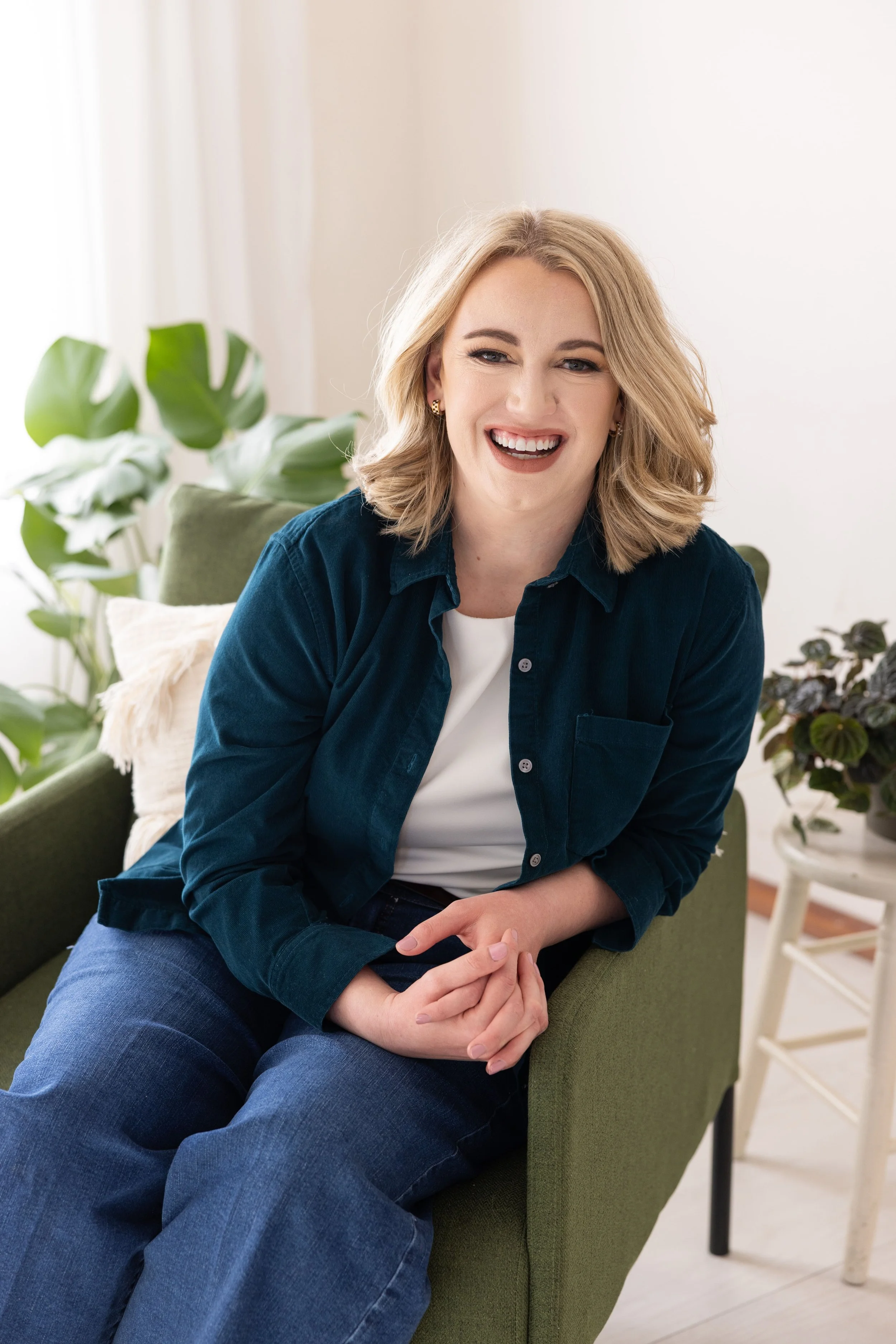
About Cassandra Minnick
EMDR Intensive Therapy for Busy Professionals | Trauma & Anxiety Treatment | Licensed Professional Counselor, EMDRIA Certified
I'm an EMDRIA-certified EMDR therapist with over a decade of experience helping adults understand and heal from chronic trauma. My practice focuses on the often-confusing patterns that emerge in adulthood—the behaviors, reactions, and relationship dynamics that don't make sense until we trace them back to their origins.
Chronic trauma doesn't always look like what we expect. It shows up in how we respond to conflict, how we relate to ourselves, and in the persistent feeling that something is "off" even when life looks fine on the surface. I work with clients to make sense of these patterns and create lasting change through EMDR therapy.
I specialize in EMDR intensive therapy—a condensed format that works particularly well for busy professionals who need effective treatment without the commitment of weekly sessions stretched over months or years.
I've been practicing EMDR since 2016, and I'm passionate about helping people move from survival mode to actually living their lives. When you've spent years adapting to trauma, reclaiming yourself is both powerful and possible.
